Slow Drains and Sewer Backups: Causes and When to Call a Plumber
If water is pooling in your shower, your kitchen sink drains like molasses, or your toilet is making a sound it has never made before, something is going on with your drains. Slow drains and sewer backups are one of the most common calls we get here at JB Plumbing HVAC and Construction, and one of the most misunderstood problems in any home.
Some slow drains are simple fixes. Others are signs of something much more serious happening underground. Knowing the difference can save you a lot of money and a lot of headaches. Here is what you need to know.
What Causes Frequent Drain Clogs?
Most people assume a slow drain just means something got stuck near the drain opening. That is sometimes true, but repeat clogs and multiple sluggish drains point to deeper problems in your plumbing system.
The Most Common Culprits
- Grease and soap buildup: Kitchen drains are constantly hit with cooking grease, dish soap, and food particles. Over time, grease coats the inside of your pipes and narrows the opening until water can barely get through.
- Hair and soap scum: Bathroom drains collect hair and soap residue faster than most people realize. It builds up at the p-trap and in the branch lines leading to the main drain.
- Tree root intrusion: This is a big one in older neighborhoods. Tree roots naturally grow toward moisture, and older clay or cast iron sewer lines have joints that roots love to push through. Once roots are inside the pipe, they catch everything that flows past and clogs happen constantly.
- Aging or corroded pipes: In homes built in the mid-1900s, the original drain lines may be cast iron, galvanized steel, or clay, all of which degrade over time. As pipes corrode or shift, the interior gets rough and narrow, making clogs much more frequent.
- Flushed items that should not be flushed: Wipes (even ones labeled "flushable"), paper towels, feminine products, and cotton balls do not break down in your sewer system the way toilet paper does. They collect and cause blockages.
If your drain clogs once, it might just be a localized blockage. If it keeps coming back every few weeks, the drain cleaning is treating the symptom, not the cause. That is when it is worth having a plumber take a closer look at what is actually happening in your lines.
How to Tell If Your Plumbing Is Backed Up
A single slow drain and a full sewer backup are very different problems, but they can feel similar at first. Here are the signs that tell you which one you are dealing with.
Signs of a Localized Clog
- Only one fixture is slow: the kitchen sink, one bathroom tub, or one toilet
- The problem clears temporarily after using a plunger
- No unusual sounds from other drains in the house
- No odors coming from floor drains or other fixtures
Signs Your Main Sewer Line Is Backed Up
- Multiple drains throughout the house are slow at the same time
- Water backs up into the tub or shower when you flush the toilet
- You hear gurgling or bubbling from the toilet after running the sink
- A sewage smell is coming up from floor drains, especially in the basement
- Your lowest drains (basement floor drain, first-floor toilet) are the first to show backup
When the main sewer line is affected, every drain in your home is connected to the same problem. Using water anywhere in the house (running the dishwasher, doing laundry, taking a shower) pushes more water into an already blocked line. That is how a small backup turns into a much bigger mess.
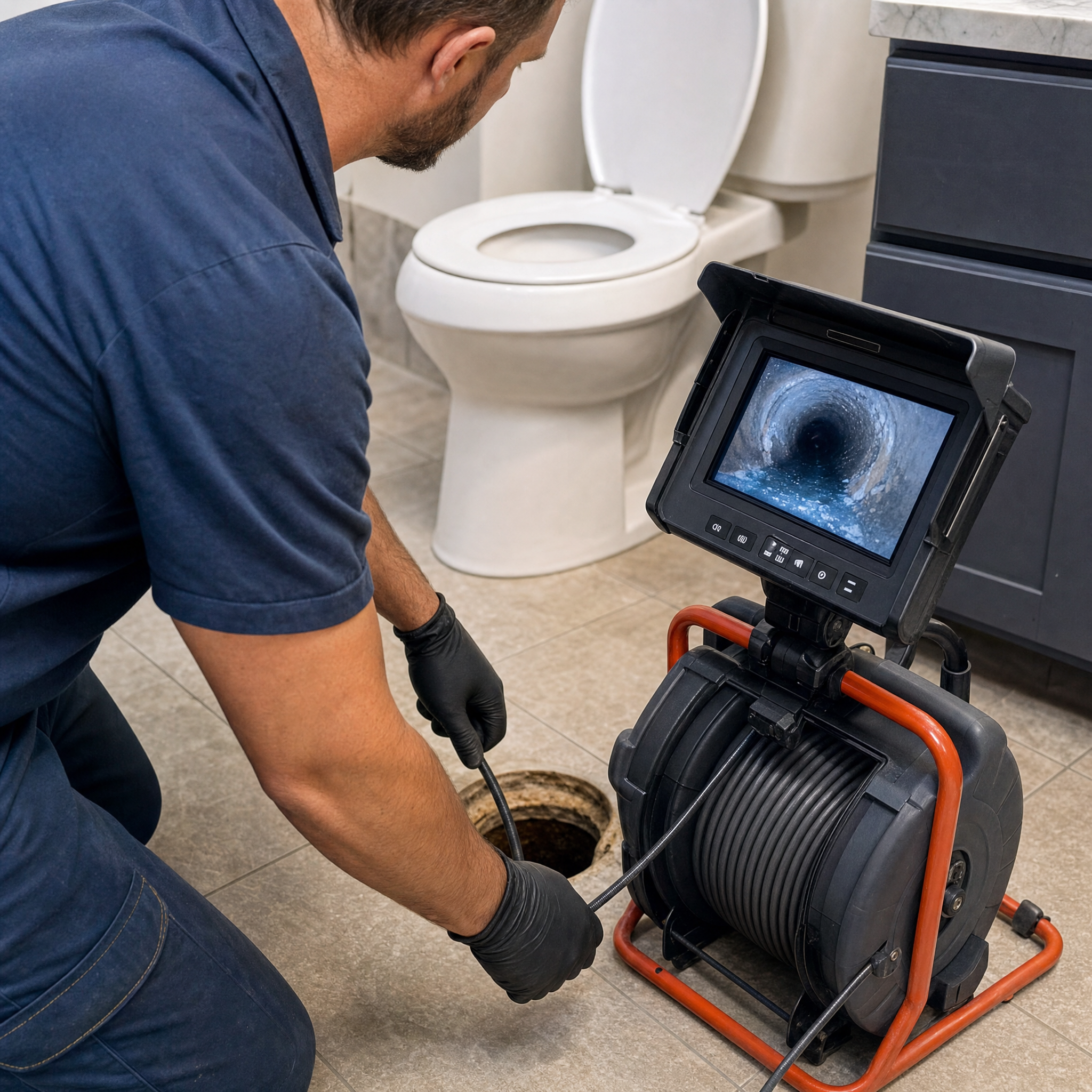
If you are seeing any combination of these signs, our team at JB Plumbing HVAC and Construction can camera-inspect your sewer line to find exactly where the problem is. No guessing, no digging until we know what we are dealing with. For more on what that process looks like, check out our post on our drain and sewer cleaning services.
Can I Shower If My Sewer Is Backed Up?
Short answer: no. If you have a confirmed or suspected sewer backup, you should stop using water in the house until a plumber clears the line.
Here is why. Your home's drain system all flows downhill to one main sewer line that exits through your foundation and connects to the municipal sewer or your septic system. When that main line is blocked, there is nowhere for water to go. Every gallon you send down a drain has to go somewhere, and it will find the path of least resistance, which is usually the lowest open fixture in the house.
That means the shower you just took may push sewage up through a floor drain in your basement. Running the dishwasher can cause the toilet to overflow. What starts as an inconvenience can become a serious sanitation and water damage problem fast.
If there is sewage on the floor or coming up through any fixture, do not try to clean it yourself or keep using the home's plumbing. Call a professional plumber right away and keep family members away from the affected area. Sewage carries bacteria and pathogens that are genuinely hazardous.
Does a Gurgling Toilet Mean a Broken Sewer Line?
Not automatically, but do not ignore it either. A gurgling toilet is your plumbing system telling you there is air trapped somewhere it should not be. That air gets displaced when water moves through a partially blocked or improperly vented pipe.
What Gurgling Usually Points To
- Partial blockage in the main line: There is enough of a clog to trap air pockets, but water is still getting through. This is the most common cause and it usually gets worse before it gets better.
- Blocked vent stack: Every drain system has a vent pipe that runs up through your roof to let air in and gases out. Summer storms, debris, and birds can block that vent, which causes gurgling sounds across multiple fixtures.
- Damage or collapse in the sewer line: If the pipe itself has cracked, settled, or been invaded by roots, water does not flow cleanly and air gets trapped. This is more serious and may require repair or replacement of the affected section.
A one-time gurgle when you flush is not necessarily an emergency. But if your toilet gurgles every time someone runs water anywhere in the house, or if it is happening alongside other slow drain symptoms, that is worth a plumber's attention. A camera inspection is the fastest way to rule out a broken line.
When to Call a Plumber (and When It Can Wait)
Here is the honest version of this answer, the one we would give a neighbor.
Call a Plumber Right Away If:
- Multiple drains in the house are slow or stopped
- Sewage or dirty water is backing up into any fixture
- You smell sewage inside your home
- The toilet is gurgling and you also have slow drains elsewhere
- Your basement floor drain is showing any signs of backup
- A drain clog keeps coming back every few weeks despite cleaning
Can Wait a Day or Two If:
- One sink or tub is slow but everything else is draining fine
- A plunger cleared the clog and it has not come back
- There are no odors and no signs of backup anywhere else
One thing we strongly advise against: chemical drain cleaners. Products like liquid drain openers are harsh enough to damage pipes, especially older cast iron and PVC, and they almost never fix anything deeper than a surface-level clog. They can also create a hazardous situation if a plumber later needs to work on that line. A drain cleaning done with professional equipment gets to the actual blockage without the risk.
At JB Plumbing HVAC and Construction, we have been serving Wyomissing, Sinking Spring, Birdsboro, Douglassville, and Exeter since 2011. Jeff Blew started this company to give homeowners straight answers and quality work, not upsells and guesswork. With over 200 five-star reviews, our reputation in this community means everything to us, and we treat every drain call the same way: figure out what is actually wrong and fix it right.
Frequently Asked Questions About Slow Drains and Sewer Backups
Can I shower if my sewer is backed up?
No. If your sewer line is backed up, using any water in the house (showering, flushing, running the dishwasher) pushes more water into an already blocked system. That water has to go somewhere and will back up through the lowest fixtures in your home, often the basement floor drain or tub. Stop using water and call a plumber immediately.
Does a gurgling toilet mean a broken sewer line?
It can, but not always. A gurgling toilet usually means air is trapped somewhere in your drain system due to a partial blockage, a clogged vent stack, or damage to the sewer line. If it is happening alongside other slow drains or odors, have a plumber camera-inspect the line to rule out a break or root intrusion.
What causes frequent drain clogs?
Repeat clogs usually come from grease buildup, hair and soap scum accumulation, tree root intrusion into older sewer lines, or corroded pipes that have narrowed over time. If the same drain keeps clogging after cleaning, the real problem is likely further down the line than a standard drain snake can reach.
How do you tell if your plumbing is backed up?
The clearest signs are multiple slow drains happening at the same time, water backing up into the tub or floor drain when you flush the toilet, gurgling sounds from fixtures you are not using, and sewage odors coming up from drains. Any one of these warrants a call to a professional plumber.
Is a slow drain always a sign of a serious problem?
Not always. A single slow drain is often just a localized clog at or near the fixture. The concern is when multiple drains are slow at the same time, when the clog keeps coming back, or when other warning signs like gurgling or odors show up alongside it.
How much does drain cleaning cost?
Cost depends on the location of the clog, how deep it is, and what equipment is needed to clear it. A professional plumber will assess the situation and give you a clear estimate before any work starts. JB Plumbing HVAC and Construction offers free estimates, and financing is available for qualified homeowners.
When should I call a plumber for a slow drain instead of handling it myself?
If a plunger does not clear the drain in a few attempts, or if the clog keeps coming back, it is time to call a professional. Chemical drain cleaners are hard on pipes and rarely fix deeper problems. A professional plumber has the tools to clear the actual blockage and inspect the line for anything more serious.
Need Help With Your Home?
Family-owned in Reading, PA since 2011. Plumbing, HVAC, and remodeling done right the first time.