Signs Your Water Heater Needs Replacement
How to Tell If Your Water Heater Needs Replacing (Not Just Repairing)
We see this all the time, especially in older homes where the water heater has been patched along for years: the unit starts acting up, and the homeowner isn't sure if they need a repair or a whole new installation. Here's the honest way we look at it after doing this work for years.
The real test? Age plus symptoms together.
A unit under 8 years old with one isolated problem is worth repairing. A part fails, you fix it, and you get years of good service back. That math works.
But once a water heater crosses 10 years and starts showing any of the signs below, you're likely throwing money at a unit that's already on its way out. It's the beginning of the end.
The 7 Warning Signs Your Water Heater Is Done (With Age Context)
If your water heater is 10 years or older, pay close attention to these signs. Any one of them on a unit that age usually means replacement, not repair.
Rusty or discolored hot water. This shows up most often after year 10 to 12. When the water coming out of your tap looks orange or brown, the tank is corroding from the inside. The anode rod that protects the tank has worn out. Once the tank itself starts rusting, it's finished.
Rumbling, popping, or banging sounds. Berks County water is notoriously tough on water heaters. Sediment builds up on the bottom of the tank over time, and around year 8 to 10 you start hearing that sediment getting baked every heating cycle. Flushing the tank can help early on, but if your unit is already past 10 years, those sounds usually mean the damage is irreversible.
Water pooling around the base of the tank. Not a repair situation. A leak from the tank body itself means the metal has cracked or corroded completely through, and it doesn't matter if the unit is 6 years old or 15. That unit needs to come out. Period.
Inconsistent hot water or long recovery times. After year 10, if you're running out of hot water faster than you used to or the water never gets as hot as it should, the heating elements are failing or sediment has buried them. This is common in older homes in Wyomissing and West Reading where original water heaters get pushed well past their service life.
Rising energy bills with no change in usage. An aging water heater works harder to do the same job. If your gas or electric bill has crept up and you haven't changed your habits, the water heater is likely responsible. A unit struggling past year 12 costs real money every single month.
Sulfur smell, like rotten eggs. If your hot water starts smelling like sulfur, bacteria are growing inside the tank, which happens more often in older units where the anode rod has worn down. Sometimes flushing fixes it. But once the unit is past 10 years and the smell keeps coming back, the tank itself is breeding the problem and replacement is the cleaner answer.
The unit is 12 or more years old with any of the signs above. Age plus symptoms. If your heater checks one of the six signs above and is also past year 12, replacement is the right call. You won't fix your way back to a unit that performs like new at that point.
Why Hard Water Shortens Water Heater Life
Berks County water is moderately hard, which means minerals like calcium and magnesium are constantly flowing into your tank and settling at the bottom. Homes in Wyomissing and Exeter deal with this same issue.
That sediment layer acts like insulation between the burner and the water. The burner has to run longer and hotter. Over time, that extra heat cracks the glass lining inside the tank, and once that lining goes, you're looking at rust, leaks, and a unit that's done.
In soft-water regions, a water heater might last 12 to 15 years. In hard water? Eight to 11 years instead. That's a major difference, and most homeowners don't know it until they're standing in a puddle.
Flushing your tank once a year slows the buildup, but if that hasn't been done regularly, the damage adds up fast. If your unit is already past year 8 and you've never had it flushed, it's worth calling JB Plumbing HVAC and Construction before it quits on its own schedule.
What Winter Does to Older Water Heaters
From November through March, your water heater works harder than any other time of year. Groundwater coming into your property is much colder in winter, so the unit has to burn more energy just to hit your target temperature. That extra strain compounds over years.
The first hard freeze of the season brings our highest emergency call volume. Older units that were barely keeping up through the summer simply can't handle the jump in demand when temperatures drop hard. It happens every year.
If your unit struggled last winter, don't count on it making it through the next one. Get it looked at before it becomes an emergency.
Water Heater Replacement Cost: The Honest Range
Most homeowners ask the same question first: cost. A standard 40 to 50 gallon tank replacement, parts and labor included, depends on the unit you choose and what the installation actually requires.
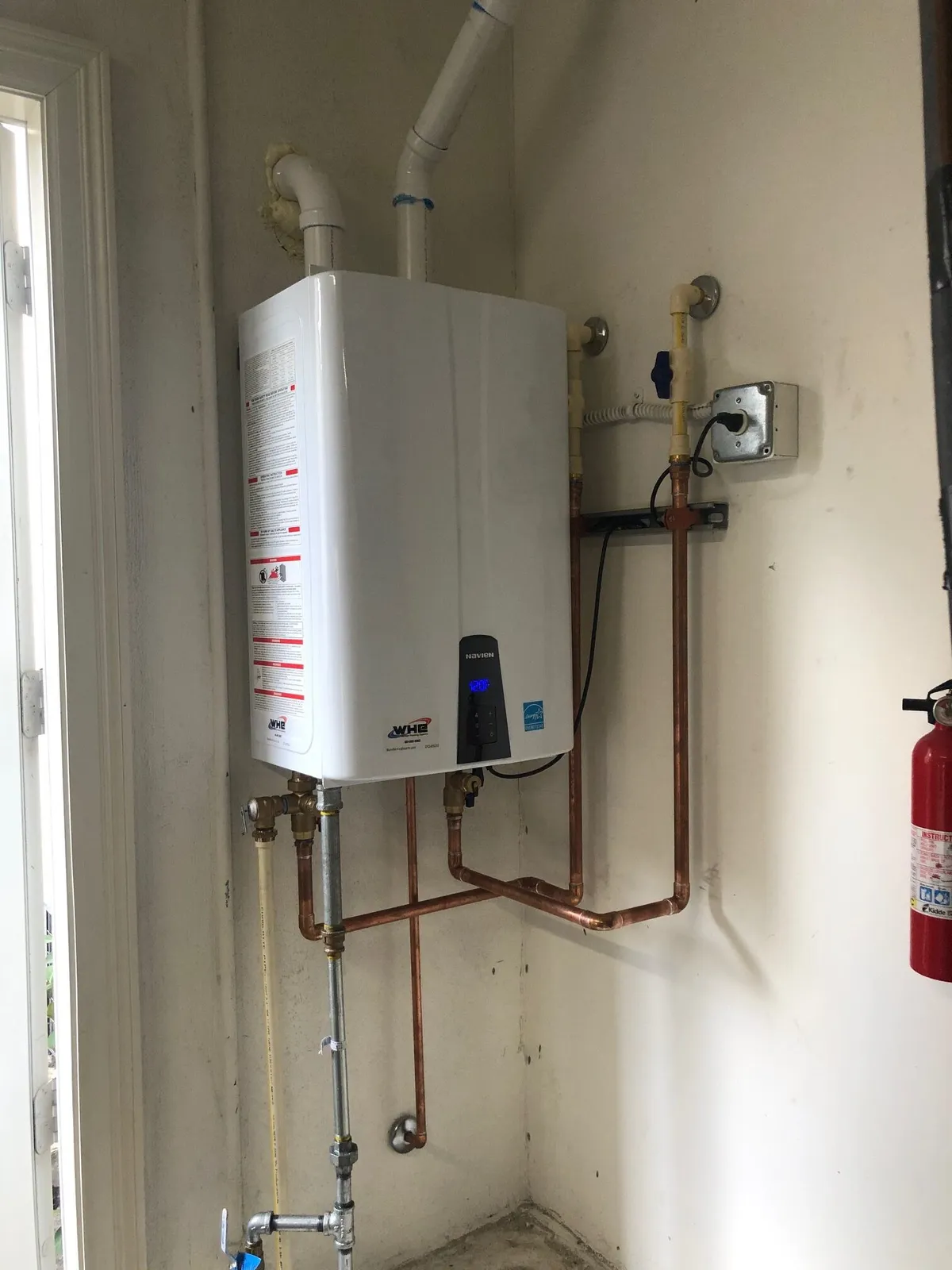
Tankless water heaters cost more up front. We don't pretend otherwise. The trade-off is lower monthly operating costs over the life of the unit, which matters if you plan to stay in your home for several years.
Older homes sometimes have outdated venting or non-standard connections, which can add cost. There's no way to give you an accurate number without seeing the job in person. Anyone quoting you a firm price over the phone without looking at your setup is guessing.
Financing is available for qualified homeowners through Synchrony. With over 200 five-star reviews, our pricing reflects honest market rates, not lowball bait-and-switch quotes. You don't have to drain your savings to get a reliable unit installed. Call us at (610) 621-3452 to schedule your estimate.
Tank vs. Tankless: Which One Makes Sense for Your Home
Many homes were built with tank-style water heaters, and that setup works fine. Replacing a tank unit with another tank is usually straightforward and less expensive upfront. If your place already has the right venting and gas connections in place, a standard tank replacement is often the fastest path back to hot water.
Tankless units are different. They heat water on demand instead of storing it and typically last around 20 years, which appeals to lots of homeowners, especially in larger houses where hot water demand is high. But switching from a tank to tankless in an older home often requires upgrades, the gas line may need resizing, and the venting setup usually has to change. That adds cost and time.
Newer construction in Exeter and Spring Township is a different situation. Many of those homes were built with tankless units from the start, so if you already have one and just need a replacement, the process is much simpler because the infrastructure is already there.
There is no single right answer for every home. We look at your existing setup, your household size, and your budget before making a recommendation. We'll tell you straight which option makes sense for your house.
Repair vs. Replace: How to Make the Call
Here's our field rule: if the repair costs more than 50% of what a new unit would cost and your heater is older than 8 years, replace it. Pouring money into an aging unit rarely makes sense.
Once a water heater hits 12 years, parts get harder to find, and some manufacturers stop supporting older models completely. That means longer waits, higher costs, and more headaches every time something breaks.
Tank leaking? Stop. No repair fixes a failed tank. The steel is done. Replacement is the only answer.
We've been doing this work for years.
If you've had two repairs in a single year on an older unit, a third is coming, and that's money you could be putting toward a new installation instead. We've walked through the signs, the cost range, and how Berks County water shortens lifespan. Here are the questions we hear most often.
Frequently Asked Questions About Water Heater Replacement
Does JB Plumbing HVAC and Construction offer same-day water heater replacement?
Yes, in most cases. We keep common units in stock and can often get your water heater replaced the same day you call. Call us at (610) 621-3452 and we'll tell you upfront what we have available.
How long does water heater installation take?
A standard tank replacement usually takes two to three hours. Switching from a tank to a tankless system takes longer. Sometimes four to six hours depending on the existing setup.
What brands or types do you install?
We install Rheem, Bradford White, and Navien units, including tank, tankless, and hybrid models. We carry full lineups from these manufacturers and can help you pick the right unit for your home and budget.
Is financing available for water heater replacement?
Yes. Financing is available for qualified homeowners through Synchrony. A water heater failure is never planned, so ask us about your options when you call and we'll find something that works for your situation.
How long should a water heater last?
Hard water is tough on water heaters. In hard water, tank units often last eight to twelve years rather than the twelve to fifteen you might see in softer water areas. Tankless units generally last longer, but they need regular flushing to handle the mineral buildup.
Do I need a permit for water heater replacement?
Yes. Water heater replacement generally involves a permit, code-compliant installation, proper venting, and inspection. We confirm current requirements with the local code office before the job starts. We handle the permit paperwork and coordinate with the inspector for you so you don't have to deal with any of it.
Need Help With Your Home?
Family-owned in Reading, PA since 2011. Plumbing, HVAC, and remodeling done right the first time.